Time will tell: Reconstructing the age of sediments and paleoclimatic events
Biostratigraphy
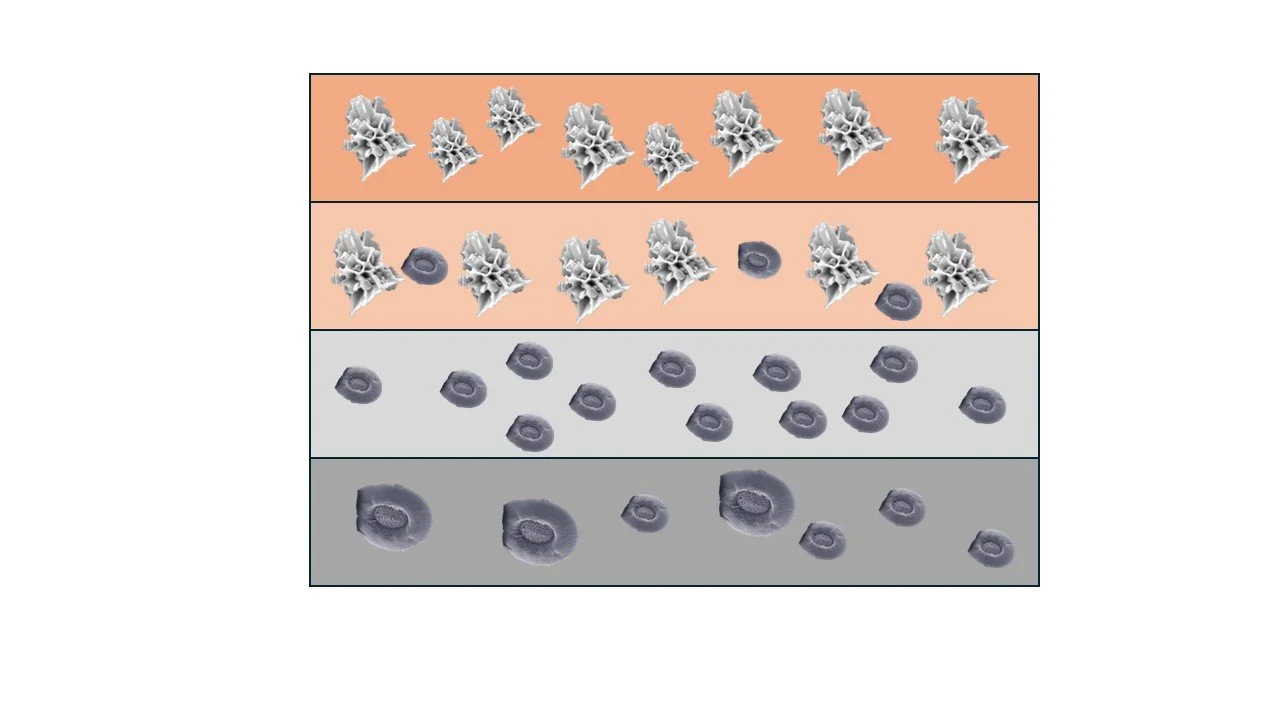
Calcareous nannofossils are very useful biostratigraphic tools. Their radiation and extinction events have been well-dated and can serve as time reference points to identify the age of marine sediments.
I am interested in biostratigraphic reconstuctions, and especially at the diachroneity of bioevents between low and high latitudes during the Miocene and the Pliocene. I am currently working on the biostratigraphic reconstructions of the IODP Expedition 395 North Atlantic sediments.
coccolith images are from: Nannotax 3 websites; courtesy: Jeremy Young
Cyclostratigraphy
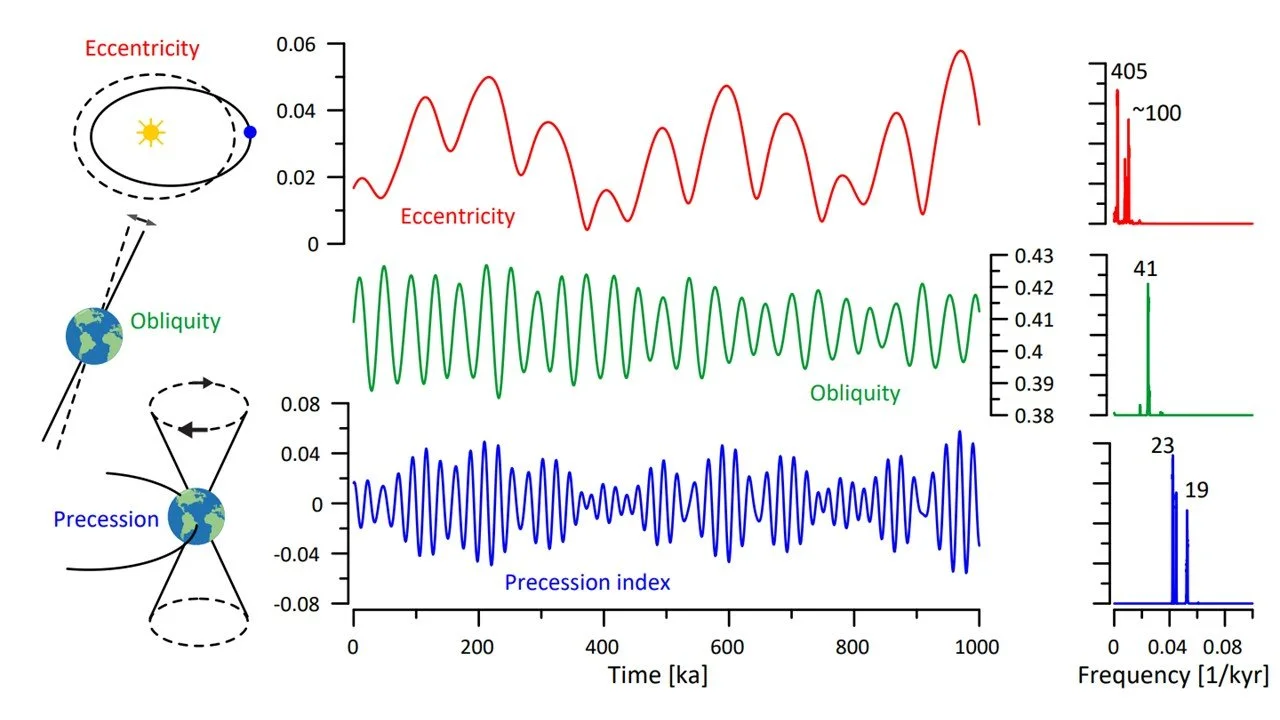
Through linking cyclical sedimentary records to Earth’s orbital solutions, we can obtain extremely high-resolution age estimates.
I am interested on the use of high resolution X-ray fluorescence records in cyclostratigraphic approaches. Currently, I am working on generating an astronomically tuned age model for the late Miocene to Pliocene at the North Atlantic IODP Expedition 395 sites.
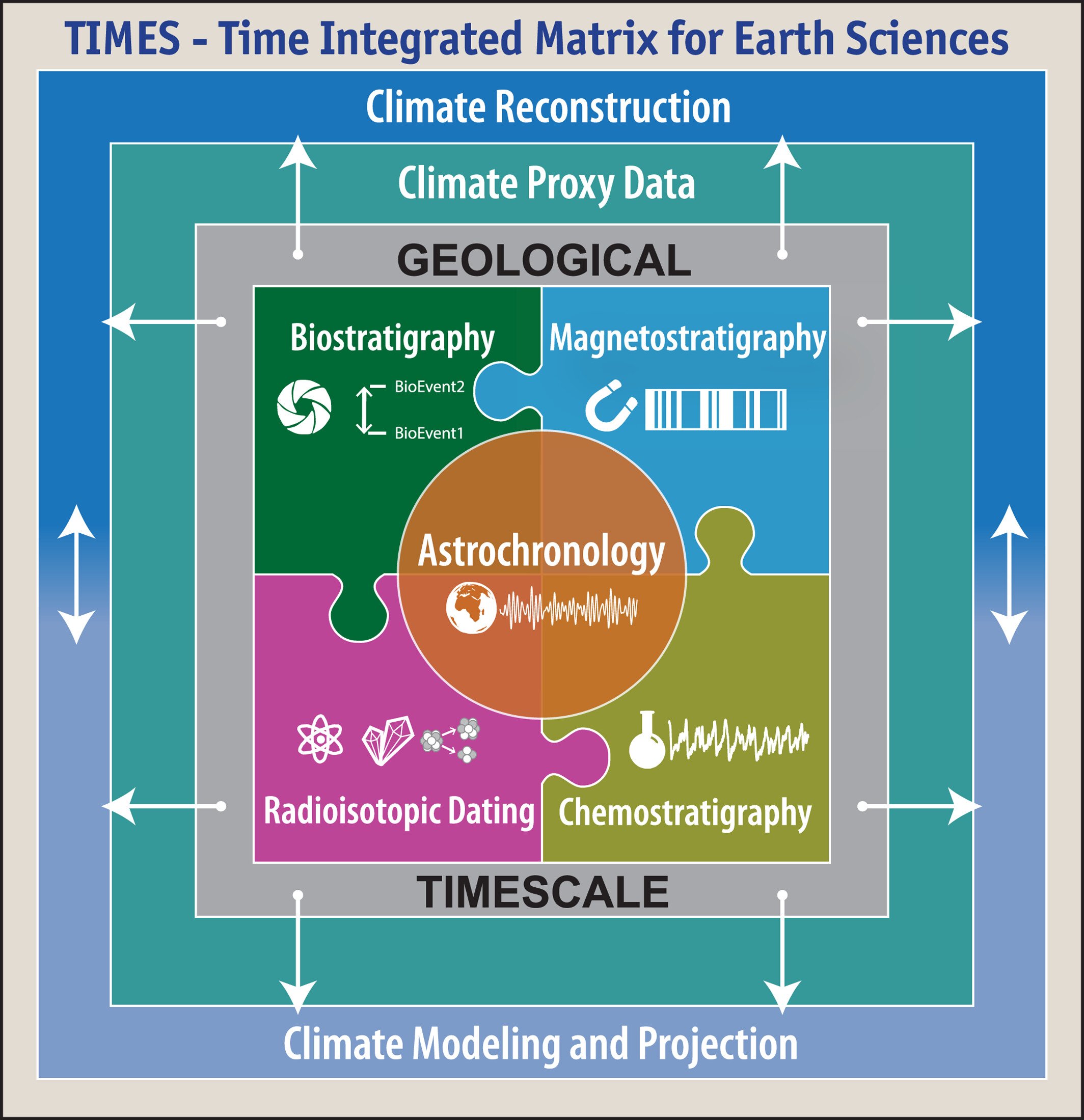
Additionally, I am involved in the TIMES project, an intenrnational effort that aims to recalibrate the age models of scientific ocean drilling records from the last 100 million years, and synchronise them in the time domain through the use of astrochronology. I am currently a member of WG1 (Biostratigraphy) and co-leading the calcareous nannofossil biostratigraphy subgroup of this initiative.
image credit: www.cyclostratigraphy.org
TIMES logo: https://agupubs.onlinelibrary.wiley.com/doi/10.1029/2024PA004932