Studying marine sediments drilled by the
International Ocean Discovery Program
-
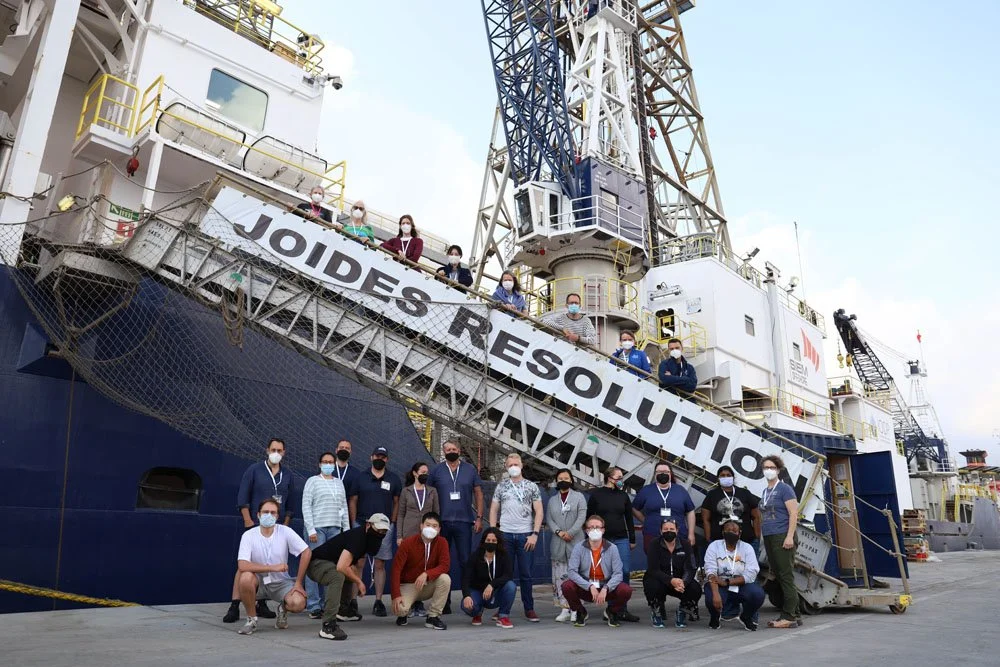
IODP Expedition 395 Reykjanes Mantle Convection and Climate
During the summer of 2023 I sailed for two months with IODP Expedition 395 as a calcareous nannofossil biostratigrapher. The Expedition drilled through thick sediment deposits of the North Atlantic that date back 32 million years.
My main goals and relevant projects related to this expedition are:
> Investigate phytoplankton productivity during the Late Miocene and Pliocene (9-3 million years ago) in the North Atlantic area.
> Explore and synthesize North Atlantic paleoclimatic proxy records in order to study the evolution of deep water formation (NADW) and Atlantic Meridional Overturning Circulation (AMOC) and its relationship to the evolution of Plio-Pliestocene glaciations.
Expedition link: https://publications.iodp.org/proceedings/395/395title.html
Relevant article: https://www.nature.com/articles/s41467-025-59265-5
image credit: Tiffany Liao
-
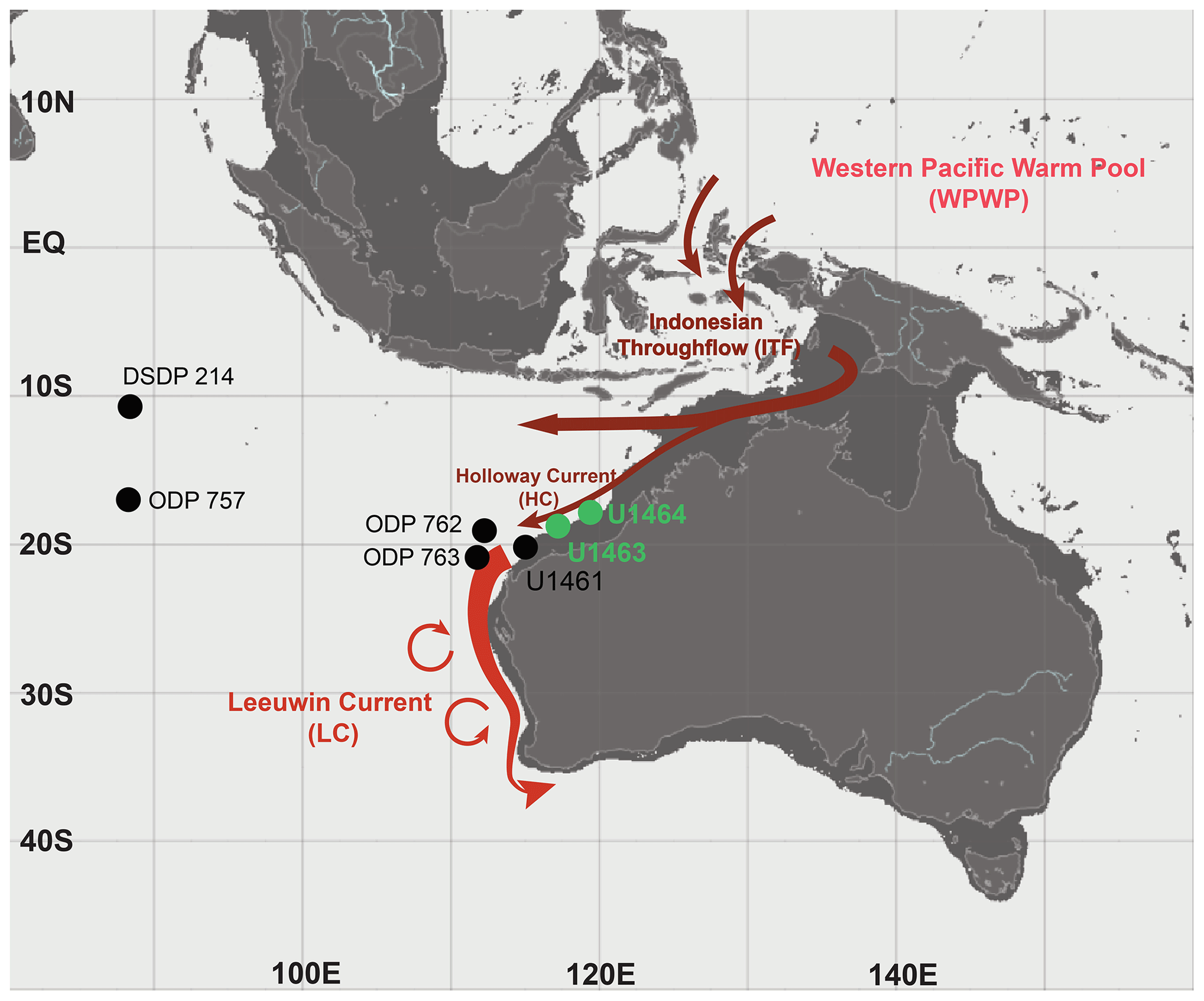
IODP Expedition 356 Indonesian Throughflow
IODP Expedition 356 recovered sediments from the Northwestern Australian shelf.
During my PhD I investigated the late Miocene and Pliocene calcareous nannofosil assemblages and the evolution of paleoclimate and ocean circulation in the area.
I am now interested on how to integrate these records with other nannofossils and paleoclimatic records in the Indian Ocean in order to understand Indonesian Throughflow and monsoonal dynamics during the warmer-than-present Pliocene period.
image from: https://cp.copernicus.org/articles/19/765/2023/
-
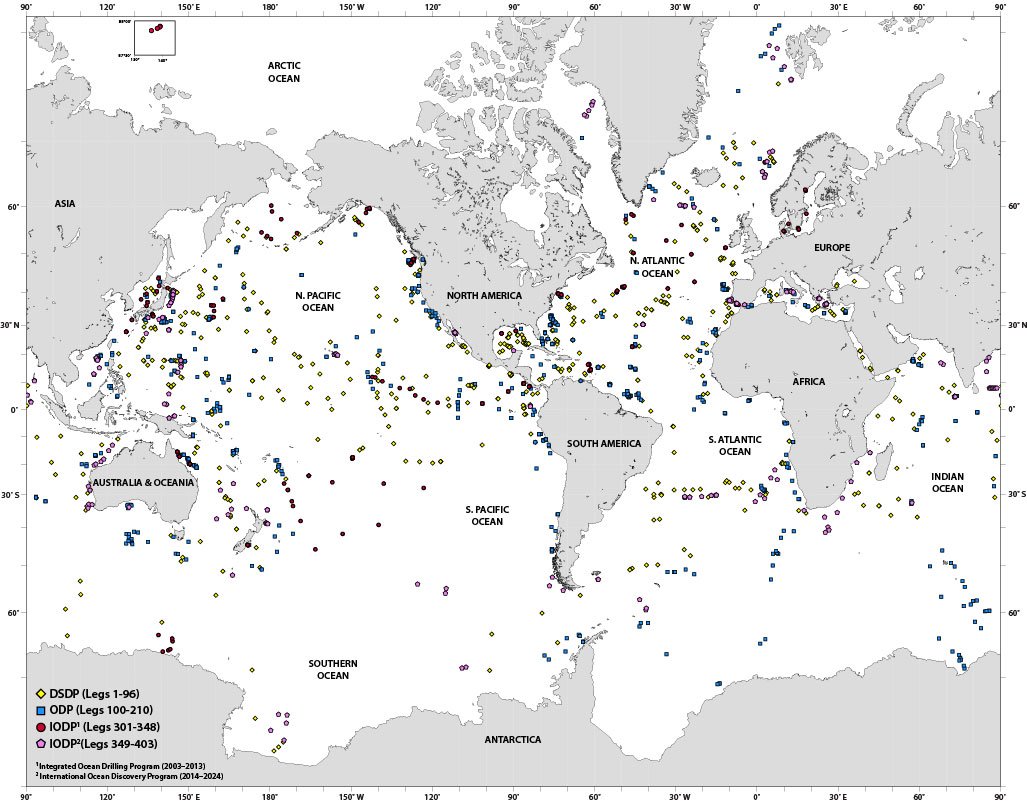
Scientific Ocen Drilling Legacy
Scientific ocean drilling has provided an extraordinary wealth of knowledge and sediment samples. This material remains available to be revisited, with new methodologies applied and existing datasets and hypotheses re-examined from fresh perspectives. While drilling new sites is essential, uncovering insights hidden within previously recovered cores is equally important. On that note, I am very interested in developing ideas and tools that will help us synthesize past records, align them to a common time framework, and enable comparisons of event timing and pattern expression across latitudes and ocean basins.
I am eager to learn from researchers with experienced in programming and big data handling, as well as discuss initiatives aimed at advancing data analysis and machine learning tools to achieve this.
image source: https://iodp.tamu.edu/scienceops/maps.html