Calcareous Nannoplankton and their fossils
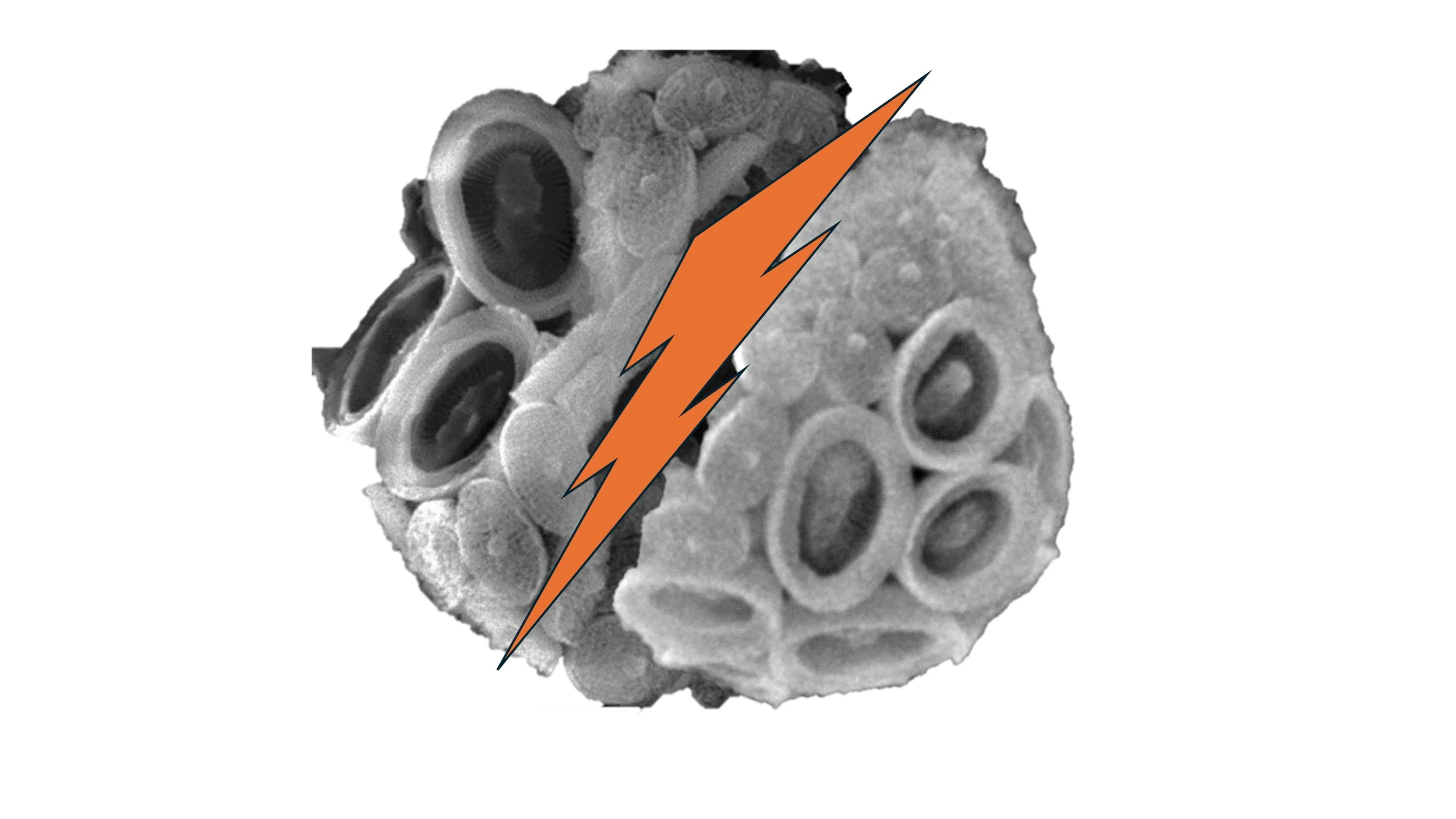
Living Coccolithophore assemblages
Coccolithophores are unicellular calcifying primary producers. These algae play a major role in the biological pump by removing CO2 from the atmosphere and storing it at the bottom of the ocean, as well as in the carbonate counterpump through calcification. Their assemblages can be useful tools for monitoring changes in seasonality, water column dynamics, temperature, salinity and ocean circulation. They are also sensitive to changes in pH and vulnerable to ocean acidification.
I am always open for collaboration when it comes to reconstructing modern coccolithophore species distrubution and abundance in marine sediments, or the water column. To do that, I use light and SEM microscopy. I have previously worked with assemblages from the Aegean, the Ionian and the Black Sea.
original images are from:
Triantaphyllou et al., 2016: https://www.jstor.org/stable/44511370
and Karatsolis et al., 2014; JNR
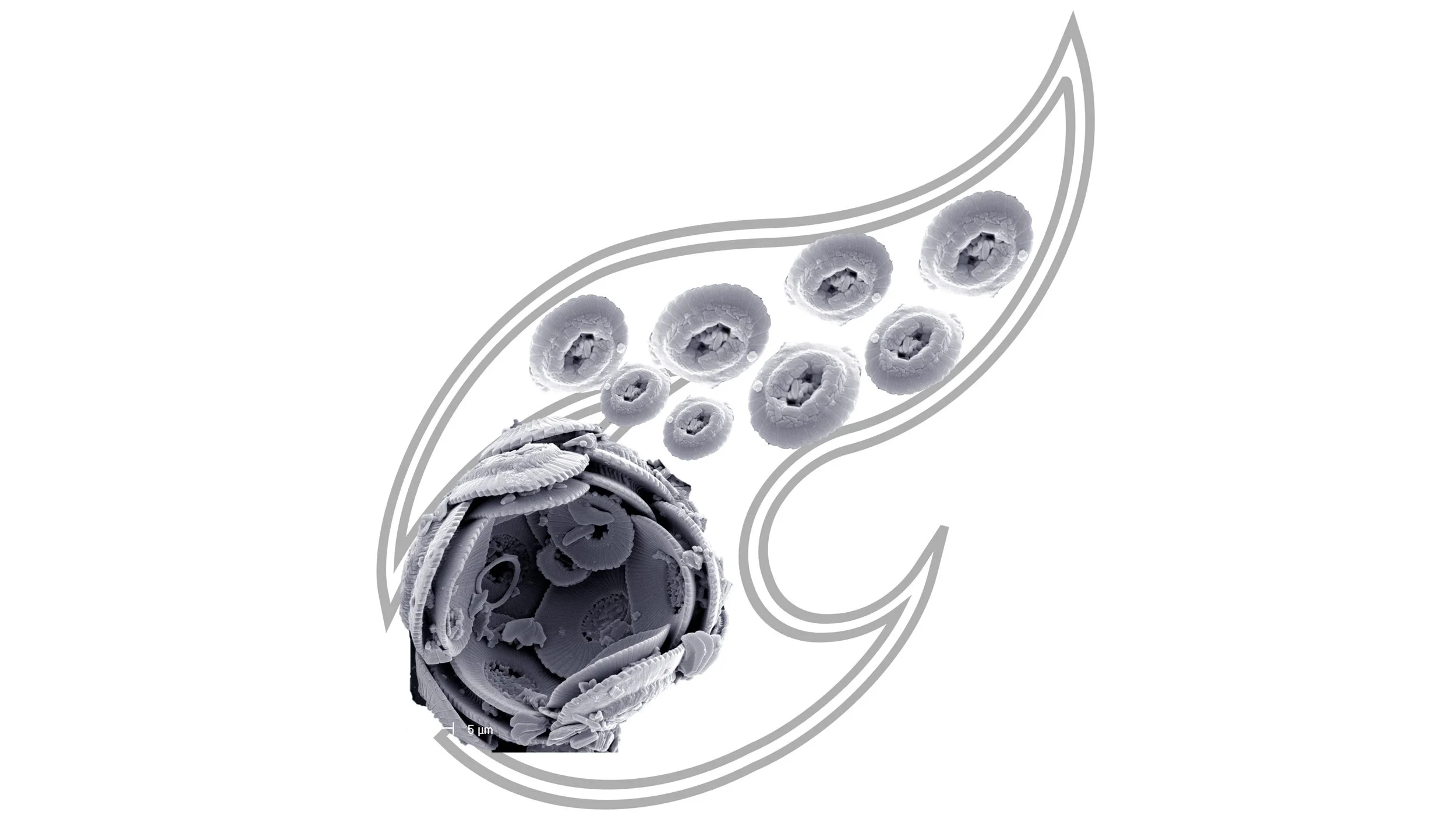
Calcareous nannofossils
Calcareous nannofossils are the fossilized remains of coccolithophores, as well as other nannoplankton groups. They are widely used in paleoclimatology and paleoecology because their distribution, abundance, and species composition record changes in ocean temperature, chemistry, and productivity.
My main research interest is studying these microfossils either directly, by reconstructing assemblage shifts and abundance patterns in deep sea sediments, or indirectly, by examining the accumulation of calcium carbonate in these sediments, which in open marine sites is largely derived from these organisms. To do that, I work with material from various ocean drilling sites in the Atlantic and Indian Ocean, mainly focusing on the late Cenozoic (Miocene to recent).
Original images are from: Nannotax3 website; courtesy: Jeremy Young